
Buncombe County Criminal History Checks
A sound Buncombe County search starts with the question the record must answer. For a recent custody event, use the Buncombe County Sheriff's Police-to-Citizen recent-arrest catalog and then its current inmate inquiry. For a filed charge and outcome, use North Carolina eCourts with the county filter. A certified county result comes from the Buncombe County Clerk of Superior Court. Someone reviewing their own statewide fingerprint history uses the North Carolina State Bureau of Investigation Right to Review process.
Gather the full name, spelling variants, likely date range, and any case or report number first. Date of birth can help distinguish common names when an official form permits it, but sensitive data should not be placed in a broad public-record request. Read the status and disposition for each charge. A search-result header or booking allegation does not establish the outcome.
- Check recent arrests and current custody in Buncombe County P2C when the event is new.
- Request the source report from the sheriff or the city police agency that created it.
- Search eCourts by name or case number, filter to Buncombe County and open the detailed docket.
- Compare charge dispositions, hearing entries, custody status, and identifying details across the records.
- Ask the Clerk for certification or use NCSBI Right to Review when the purpose calls for an official record.
The eCourts public index is the broadest court starting point, but its filters must match the question. Portal controls can change, and some document functions may require registration or payment even when the public index search is free.
| eCourts control | Use in a Buncombe County search | Required |
|---|---|---|
| Smart Search | Enter a name or exact case number and follow the portal's syntax prompts. | One search basis |
| First, middle, and last name | Start with exact spelling, then remove optional terms if no sound match appears. | Route-dependent |
| Location / County | Select Buncombe County before widening the search to another county. | Optional but important |
| Case category and type | Separate criminal and infraction matters from civil or other case groups. | Optional |
| Date range | Narrow a long list while allowing for a gap between arrest and filing. | Optional |
Four Buncombe Records, Four Custodians
An incident report, detention booking, court file, and state criminal history are separate Buncombe County products. The arresting agency writes the event report. City-County Identification and detention staff create the intake record at the Buncombe County Detention Facility. The Clerk maintains the District or Superior Court case after a charge enters the court system. NCSBI links qualifying fingerprint arrest cycles with reported dispositions in the state repository.
Record flow: Police or Sheriff report › Buncombe booking › District or Superior Court case › NCSBI disposition reporting.
That flow explains common gaps. A prosecutor may amend or decline an arrest charge. A released person can disappear from the current inmate list while the arrest and court case remain. An older paper document may not appear as an image online. When one layer seems wrong, contact the custodian of that source before asking a later system to correct its copy.
Official Background Checks in North Carolina
North Carolina has no general-public NCSBI name-search portal. The closest statewide personal record product is NCSBI Right to Review. The subject submits the original request form, an FD-258 fingerprint card, and a $14 certified check or money order. NCSBI mails the result only to the subject, offers no same-day service, and advises allowing up to 20 business days. The City-County Division of Identification takes fingerprints by appointment at 52 Coxe Avenue in Asheville.
County court searches serve a narrower role. The Judicial Branch offers a certified Buncombe County criminal-record search through the Clerk, while City-County Identification advertises a Buncombe court-case check. Neither is a statewide NCSBI rap sheet. The right choice depends on whether the reader needs a public court index, a certified county result, or their own fingerprint-linked statewide history.
| Official product | Scope | Published fee |
|---|---|---|
| City-County ID check | Buncombe County court cases | $5 |
| Clerk certified search | Buncombe County court records | $25 |
| NCSBI Right to Review | Subject's North Carolina fingerprint history | $14 |
Buncombe County Checks at Coxe Avenue
The $5 Coxe Avenue check and the $25 Clerk search should not be treated as interchangeable labels for a full background check. City-County Identification describes its product as a Buncombe County court-case check with a 24-hour processing period. The Clerk's product uses the statewide Judicial Branch form and can supply a certified county result. Both depend on court information rather than a fingerprint match across the North Carolina repository.
For the statewide self-review, City-County Identification supplies the local fingerprint step. The completed NCSBI package then goes by mail to the Applicant Unit at 3320 Garner Road in Raleigh. If the response contains an error, obtain and review the record first, then send NCSBI a written exception. NCSBI audits the entry with the arresting agency. That source-first correction path matters because a name-only county index cannot fix a fingerprint transaction stored by the state.
Kinds of Criminal Records
Buncombe County records describe different points in the justice process. Basic incident facts may be public while the complete investigative file remains closed. An arrest record documents custody under legal authority, not guilt. A booking entry adds intake, identity, bond, court date, and release data. Once a case is filed, eCourts and the Clerk track charges, hearings, rulings, judgments, and money owed.
- Incident and arrest records: kept by the Buncombe County Sheriff or the city police agency that handled the event.
- Booking and jail records: created at Buncombe County Detention and shown through Sheriff P2C when public.
- Criminal court files: held by the Clerk for District and Superior Court in Judicial District 40.
- State criminal history: fingerprint-linked arrest cycles and reported outcomes kept by NCSBI.
- Custody and registry records: divided among the county jail, NCDAC, and the NCSBI registry.
Juvenile, expunged, sealed, victim-sensitive, and investigative material has separate access limits. A blank public search can mean restricted access, a spelling mismatch, a delayed disposition, or an older paper record. It does not prove that no record exists.
Buncombe Detention and Conviction Records
The Buncombe County Detention Facility has 604 beds across its main jail and annex. It receives people charged by local agencies and processes release around the clock under judicial instructions. Its roster answers who is currently held and what booking data was entered. It does not decide whether a charge is true. Only a judicial official sets or changes bail, and only the court docket can show a later plea, dismissal, trial result, or judgment.
The county's October 2023 presentation reported 430 people in custody at that point in time. That snapshot measured confinement, not a crime rate or conviction total. Releases, transfers, new bookings, court delay, and diversion policy all change the jail count. A recent-arrest card may remain after release, while the current inmate search may stop returning the person.
The official NCDAC Offender Public Information search shows the separate state correction and supervision layer.
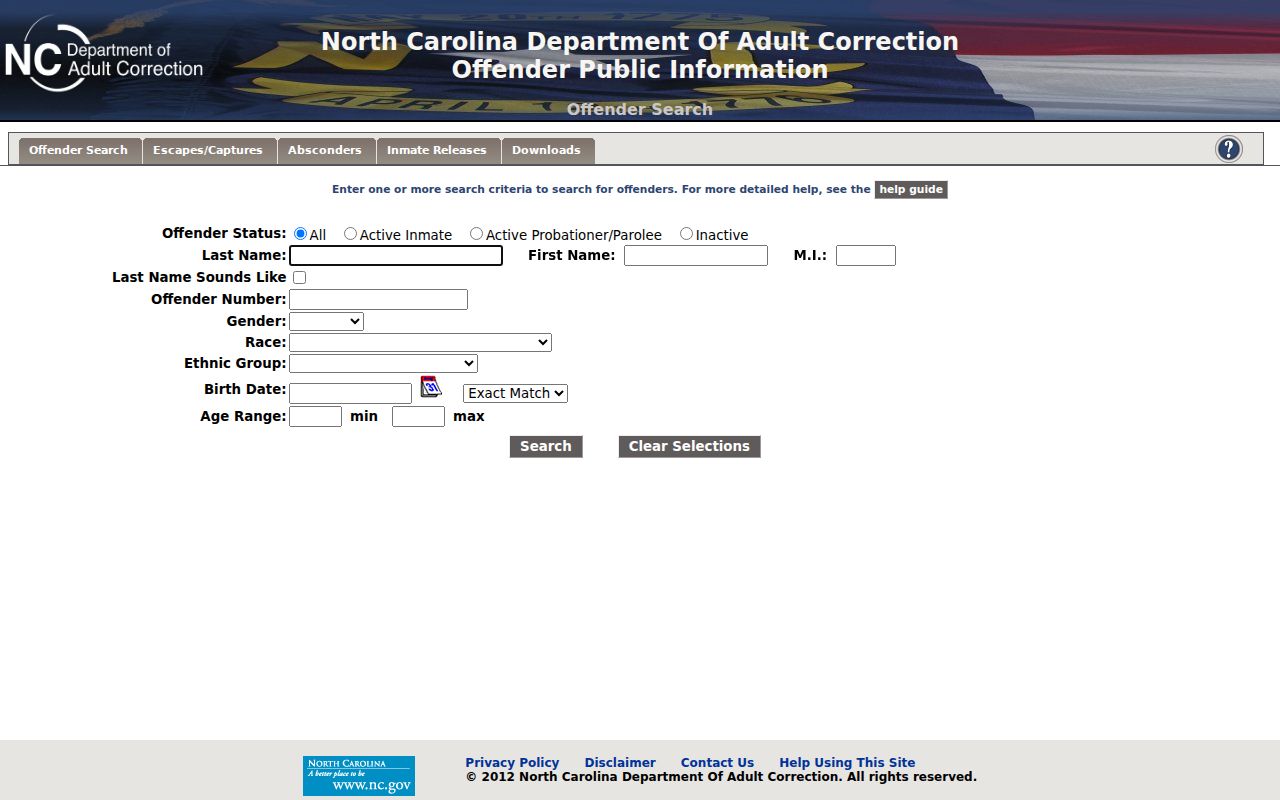
The NCDAC screen belongs in a longer record check only when sentenced state custody, probation, parole, or post-release supervision is relevant.
Buncombe County Criminal Records: What They Contain
The fields change with the custodian. A state repository record begins with identity and fingerprints, then groups arrest cycles, charges, reported outcomes, and correction or supervision entries. A Buncombe County court file emphasizes the case number, parties, docket events, hearings, charge decisions, judgment, and financial data. A booking record focuses on intake and custody. Comparing the same person across those formats requires more than matching a name.
| Name & Identifiers | Names, aliases, date of birth, physical descriptors, and record numbers where law permits public display. |
|---|---|
| Arrest / Booking Data | Arrest date, agency, intake time, holding facility, charge as booked, bond, and release fields. |
| Charges & Statutes | Alleged offense text, legal citation, class, and later prosecutor-filed charge when reported. |
| Disposition | The result for each charge, such as conviction, dismissal, acquittal, or another court outcome. |
| Sentence | The judgment, punishment type, restitution, and related court terms when public. |
| Custody / Supervision Status | County detention, state custody, probation, parole, or post-release status in the proper system. |
- Disposition
- The court's result for one charge, not merely the case's overall status.
- Docket
- The dated list of filings, hearings, orders, and other case events.
- Expunction
- North Carolina's statutory process for removing a qualifying record from ordinary public access.
- Prayer for judgment continued
- A North Carolina outcome that delays entry of judgment and must be read in its full case context.
No Public Buncombe Warrant List
No complete public Buncombe County active-warrant name database was found in the official research. Sheriff P2C and eCourts may show related records, but neither should be described as a full warrant registry. A person concerned about their own possible warrant can call Sheriff nonemergency at 828-250-6670, Sheriff Records at 828-250-4456, the criminal Magistrate at 828-250-4690, or the Clerk at 828-259-3400.
A failure to appear can lead to an Order for Arrest and a financial penalty. Confirm the issuing court and seek instructions before acting on an unofficial result. County Justice Services also identifies the Public Defender and District Attorney as contacts after a missed appearance. The Sheriff cannot reduce a bond. That authority belongs to a judicial official.
Note: Sealed, juvenile, and unserved sensitive process may be restricted, and public systems can lag after a warrant is resolved.
North Carolina Public Access Laws
North Carolina Public Records Law starts with broad access, then specific statutes set limits for police investigations, court files, state criminal history, and expunged records. Buncombe County agencies do not have to create a new analysis that does not already exist. A precise request should name the event, date range, place, report number if known, record type, and desired format. Ordinary inspection is generally free, while actual copying or an extraordinary use of staff and technology can produce a charge.
Key North Carolina laws:
G.S. 132-1 broadly defines public records subject to other legal limits.
G.S. 132-1.4 opens specified incident facts while protecting complete investigative and intelligence files.
G.S. 7A-109 makes clerk records public subject to law and remote-access rules.
G.S. 143B-1208.15 identifies NCSBI as the criminal-history repository and limits broader dissemination.
G.S. 15A-151 keeps expunged court files confidential while listing narrow authorized access.
Buncombe Criminal Records at Court Plaza
Buncombe County's public records counters cluster in central Asheville, but they do not hold the same material. The Buncombe County Courthouse at 60 Court Plaza houses the Clerk and the District and Superior Court functions. Sheriff administration is in the same address on the fourth floor. The Detention Facility and criminal Magistrate operate at 20 Davidson Drive. City-County Identification, including fingerprints and the local court-case check, is at 52 Coxe Avenue.
The 1927 courthouse is a 15-story building. A major addition in the early 2010s added a secure entrance, public and prisoner elevators, courtrooms, and a secure bridge. Visitors enter at street level, pass screening, and should allow time for security. The paid county parking deck is across the street at 164 College Street.
The North Carolina Judicial Branch's Buncombe County location page is the official route for current courthouse services.
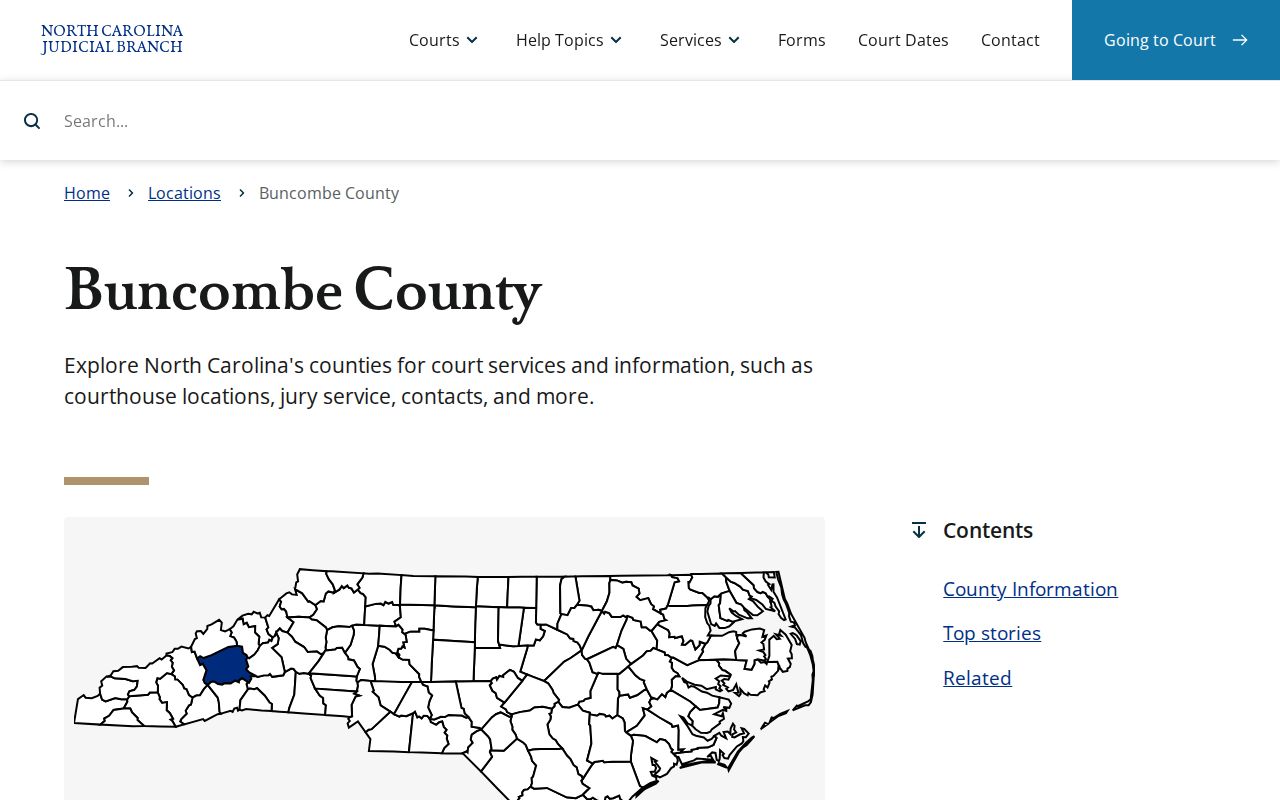
The courthouse image helps place the clerk's file counter within Buncombe County's larger justice complex.
Buncombe County Clerk
60 Court Plaza
Asheville, NC 28801
828-259-3400
Monday-Friday, 8 a.m.-5 p.m.
City-County Identification
52 Coxe Avenue
Asheville, NC 28801
828-250-4665
Call for a fingerprint appointment.
Buncombe Sheriff Records
60 Court Plaza, fourth floor
Asheville, NC 28801
828-250-4456
Administrative hours are weekdays, 8 a.m.-5 p.m.
Restricted, Sealed & Expunged Records
North Carolina restricts juvenile matters, protected addresses, victim identifiers, Social Security numbers, medical information, sealed cases, qualifying expunged cases, and confidential investigative detail. Expunction removes a qualifying case from ordinary public access, but limited confidential state records can remain for uses that the statute permits. The arresting agency may also retain investigative material without returning the court entry to public view.
Petitions are filed through the Buncombe County Clerk when the charge arose here. Eligibility depends on the exact statute, every charge's outcome, prior history, waiting periods, and exclusions. Forms include AOC-CR-295 for certain dismissed charges and AOC-CR-296 for qualifying not-guilty or not-responsible results. No page label alone can establish eligibility.
For certain cases disposed on or after December 1, 2021, G.S. 15A-146 directs automatic expunction 180 to 210 days after final disposition when every charge qualifies. A felony dismissal tied to a plea arrangement is excluded. The clerk notifies agencies after an order, but public portals and source systems may not all change at the same moment.
Buncombe Expunction Is Not Instant
A dismissed charge may still appear in a Buncombe County arrest search because the arrest record and court disposition are separate records. Even an automatic expunction has a statutory processing window, and confidential files remain available in narrow cases. Start with the complete court outcome. If an order has been entered but a public source still shows the case, ask the custodian of that source to review it.
If the NCSBI fingerprint record remains wrong, order a Right to Review and then use the written-exception process. NCSBI checks the questioned entry with the arresting agency. This sequence protects against changing only a downstream display while the original source remains inaccurate.
The official Judicial Branch criminal background-check instructions distinguish public county court searches from fingerprint history.
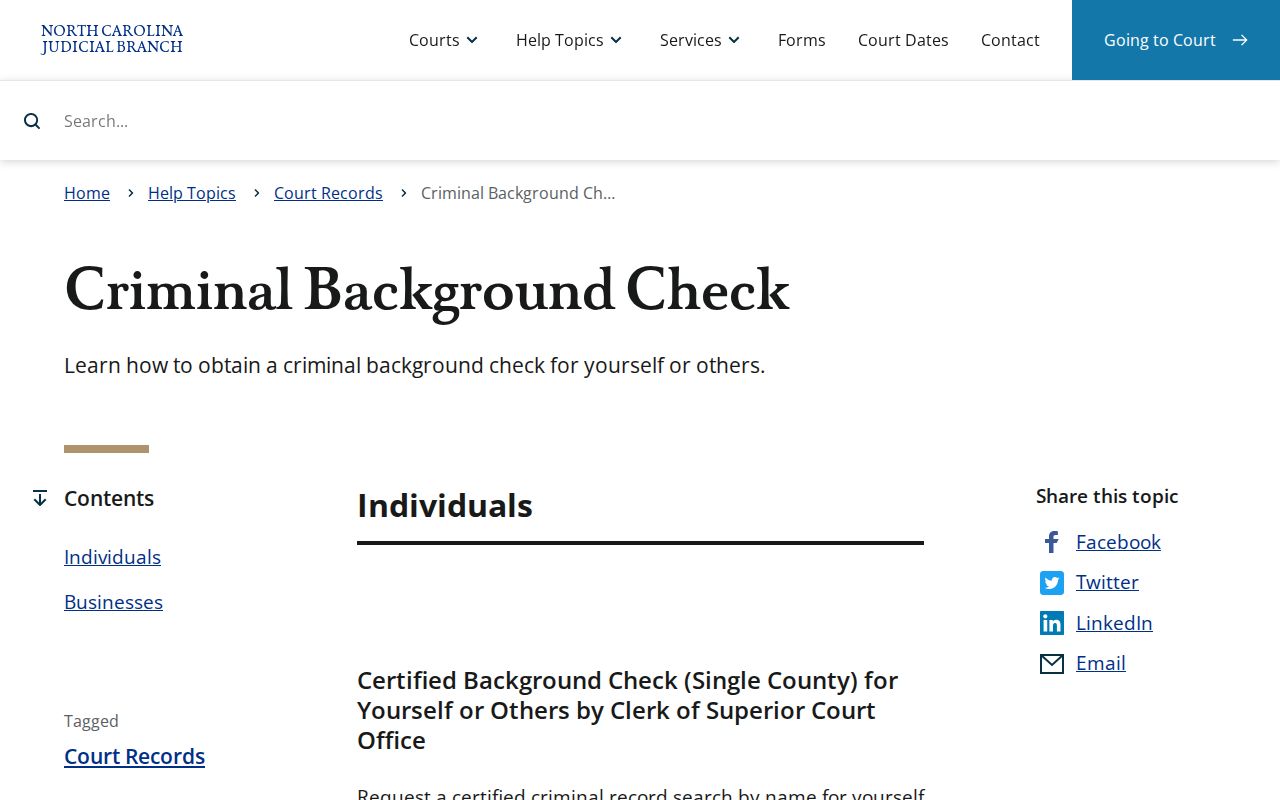
The captured state instructions reinforce why scope and certification must be checked before relying on a result.
Buncombe Criminal Custody Systems
Three custody searches cover three systems. Buncombe County Sheriff P2C covers the county detention layer. NCDAC Offender Public Information covers state prison and supervision records. The federal Bureau of Prisons locator covers federal custody. A transfer can make a person vanish from one search and appear in another without changing the court case.
Federal criminal cases also use a different docket. Buncombe County lies in the Western District of North Carolina, Asheville Division. PACER holds federal filings, while North Carolina eCourts holds state District and Superior Court cases. The federal clerk is at 100 Otis Street, not the state courthouse at 60 Court Plaza.
The Western District of North Carolina publishes the Asheville Division's court information.
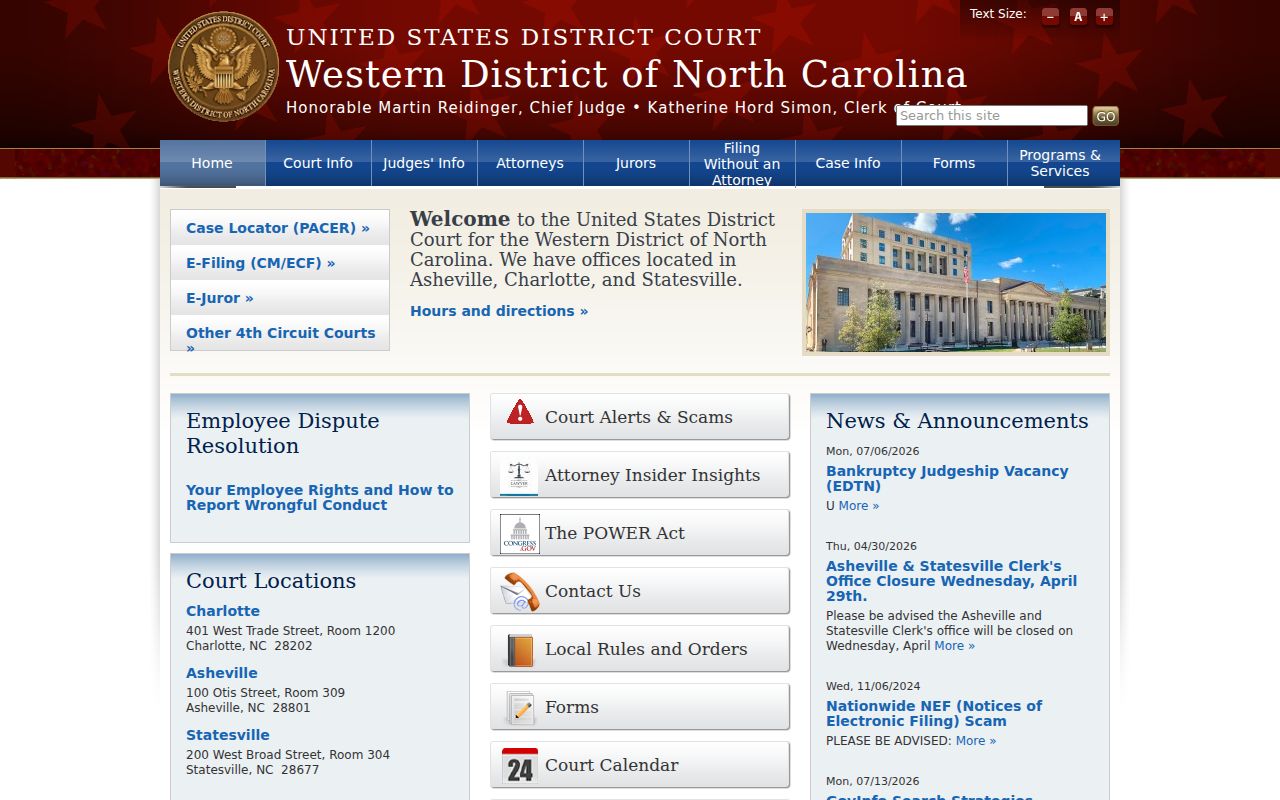
This federal source marks the boundary between PACER records and Buncombe County cases in the state eCourts system.
City-by-City Criminal Records in Buncombe County
Buncombe County's three largest incorporated places are Asheville, Black Mountain, and Woodfin. Each police department controls its own source reports, while custodial arrests move into the Buncombe County Detention Facility and criminal cases enter the unified North Carolina courts. None of the three has a separate municipal criminal court. City-level checks therefore begin with the correct police jurisdiction, then move to Sheriff P2C and eCourts for booking and court outcomes.
The Buncombe County GovQA portal is the formal online path for sheriff-created public records.
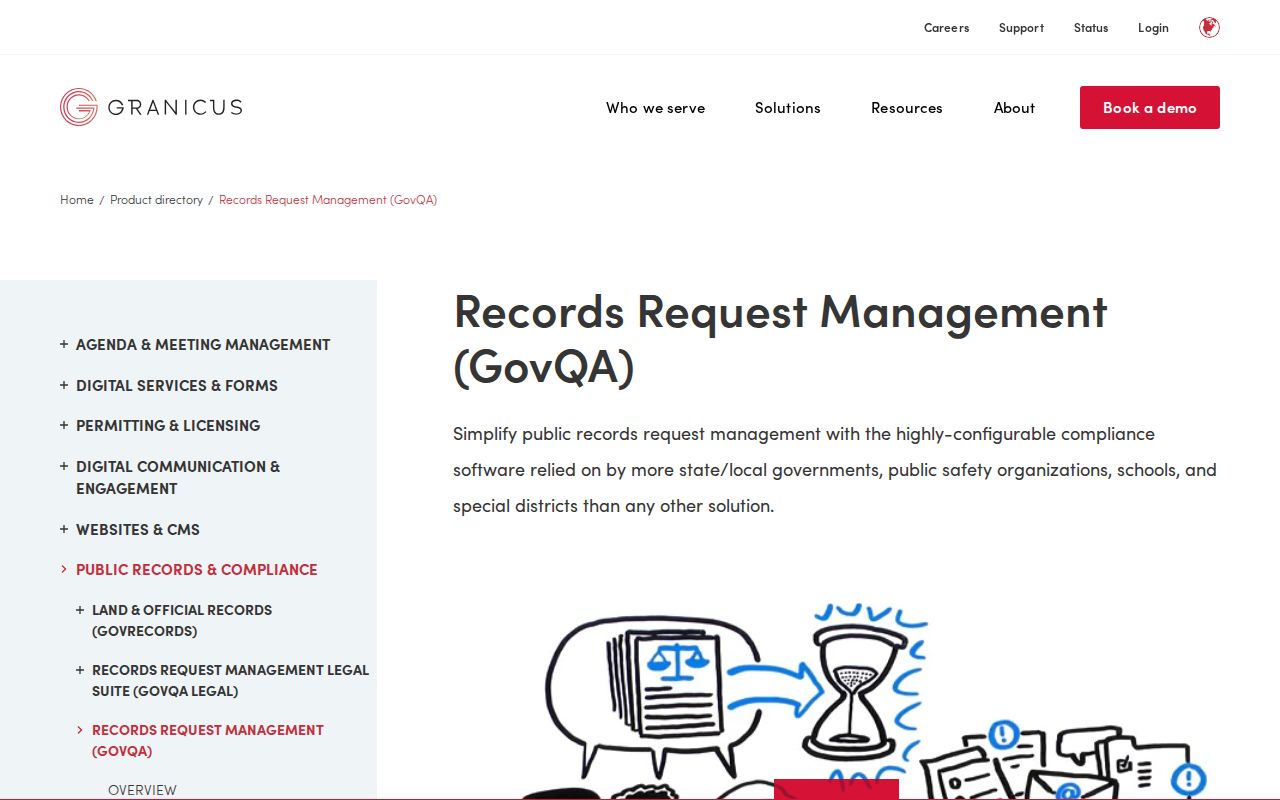
GovQA does not replace Asheville, Black Mountain, or Woodfin police channels when a city department created the source report.
Asheville Record Check
Population 98,270 · APD P2C and JustFOIA feed county booking and court searches.
Black Mountain Record Check
Population 8,678 · Police records temporarily route through Town Hall after the 2026 move.
Woodfin Record Check
Population 8,157 · Woodfin PD holds source reports despite its Asheville postal address.